
Stage 17 · Check the finished van, then start close to home
Before your first trip in your converted campervan
Make the first outing a straightforward practice run. Finish the essential checks, pack the van as you will use it and choose a nearby place where you have permission to stay. A short trip helps you learn the routines without also tackling a complicated journey.

1. Put the instructions and records together
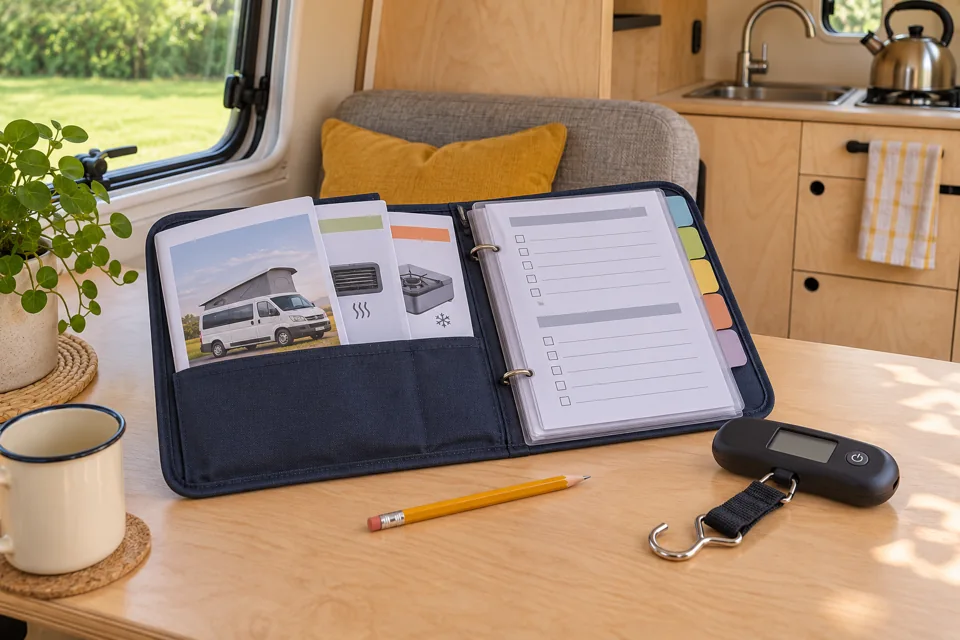
List the installed equipment and its exact model identities. Keep the manuals, required inspection or commissioning records, wiring and plumbing drawings, hidden-route photographs and service details. Store a usable copy where you can find it without relying entirely on an internet connection.
Ask the installer to demonstrate normal operation, ordinary shutdown, emergency actions, maintenance and storage procedures. Know which devices require power for an orderly shutdown and which controls are for emergency isolation. Have every regular user try the controls while the van is parked.
Confirm with the appropriate organisations that the conversion and its intended use are properly recorded and covered: insurance, vehicle documentation, licence entitlement, roadworthiness testing and any other applicable requirements. These depend on the actual vehicle and use; the guide does not determine a legal classification or an insurance decision.
2. Weigh the finished van in a representative travelling condition
Check the applicable maximum vehicle and axle limits for your completed vehicle, using the correct plates and documentation. Do not assume the original empty-van payload is still available after the conversion.
Arrange an appropriate weighing with the operator, including the axle information needed to assess loading. Agree how the van and occupants should be presented and follow the operator's directions. Use representative fuel, water, passengers, luggage, food and accessories, recording anything missing from the weighing condition.
Compare the actual total and axle readings with the applicable limits. Being below the total limit does not on its own establish acceptable axle loading. If a limit is exceeded or the remaining allowance is inadequate, resolve it before travelling; do not treat an enforcement tolerance as extra payload.
Account for roof equipment, racks, bikes and other additions, including the relevant attachment and load limits. Recheck after significant changes. Simple planning arithmetic is useful, but it does not replace a reliable finished-vehicle weighing.
You can use the GOV.UK weighbridge finder as a starting point. Confirm availability, suitability, axle-weighing options and charges directly with the operator.
3. Check the vehicle as well as the accommodation
Have unresolved roadworthiness faults addressed. Follow the vehicle handbook for checks such as tyres, wheels, lights, fluid levels, visibility and warning indications. Confirm tyre suitability and cold pressures for the actual vehicle and loading with the relevant manufacturer or tyre specialist; there is no universal campervan pressure.
Know the finished height, width and length, including fitted roof equipment or accessories. Choose a route that suits the vehicle and note limitations such as low bridges, barriers or narrow entrances. Keep a clear view through the driving windows and access to the controls.
Everyone needs an appropriate travel-seat and restraint arrangement. Living-area benches and beds are not extra passenger places just because they look comfortable. Resolve passenger seating, child-restraint compatibility and installation questions with the relevant specialists before departure.
Check mirrors and the driver's seating position with the van ready to move. Stow loose items that could enter the cab or distract the driver. Do not use a public-road braking experiment as a substitute for verifying furniture or load restraint.
4. Complete the installed-system checks before the practice night
| System | What should be resolved |
|---|---|
| Electrical and charging | Appropriate inspection/testing, correct settings, accessible protection and isolation, known operation of each intended supply. |
| Water and drainage | Suitable cleaning/filling procedure, leak checks, accessible joints, appropriate waste storage and known draining routine. |
| Heating and hot water | Completed installation checks and commissioning, clear air paths, correct operating and shutdown procedures. |
| Cooking and fuel arrangements | Appropriate specialist checks, compatible appliances, required clearances and ventilation, understood emergency actions. |
| Furniture and roof fittings | Suitable attachments, secure closures, required inspections, completed sealing and curing procedures. |
Use the exact appliance manuals rather than a generic start-up sequence. Some equipment needs particular conditions before use, and draining one water circuit is not the same as maintaining a separate heating-fluid circuit. Ask for clarification before operating an unfamiliar system.
Observe the installed systems in their intended modes after commissioning. Use the agreed procedure to check for leaks or abnormal behaviour; do not improvise pressure tests or expose live connections. Keep all required vents and service access clear.
A fault, suspect exhaust, unusual smell, repeated protective trip or alarm needs investigation. Stop using the affected equipment and follow the relevant emergency guidance. Do not keep resetting a fault in the hope that it will settle down.
5. Know the alarms, exits and emergency plan
Fit suitable smoke and carbon-monoxide alarms for the intended environment and position, test and maintain them according to their instructions. Confirm their location and suitability with the relevant installer or supplier. An alarm does not make an unsuitable appliance or installation safe.
Keep the exit route and designated emergency openings usable with the bed made and bags in their normal places. Make sure everyone knows how to open the doors from inside and where the keys, torch and phone will be kept.
Agree what to do if an alarm sounds or a fire or gas/exhaust problem is suspected. Prioritise getting everyone out and obtaining appropriate emergency help. Do not remain inside diagnosing a dangerous condition or re-enter to collect belongings.
Never bring a barbecue or smouldering charcoal into the van or an enclosed awning. Do not use a cooker as a space heater. Use only equipment suitable for its actual location and follow its operating restrictions. Ask a competent adviser about suitable fire-safety equipment and its placement; do not plan on fighting a fire instead of escaping.
6. Give everything a travel position
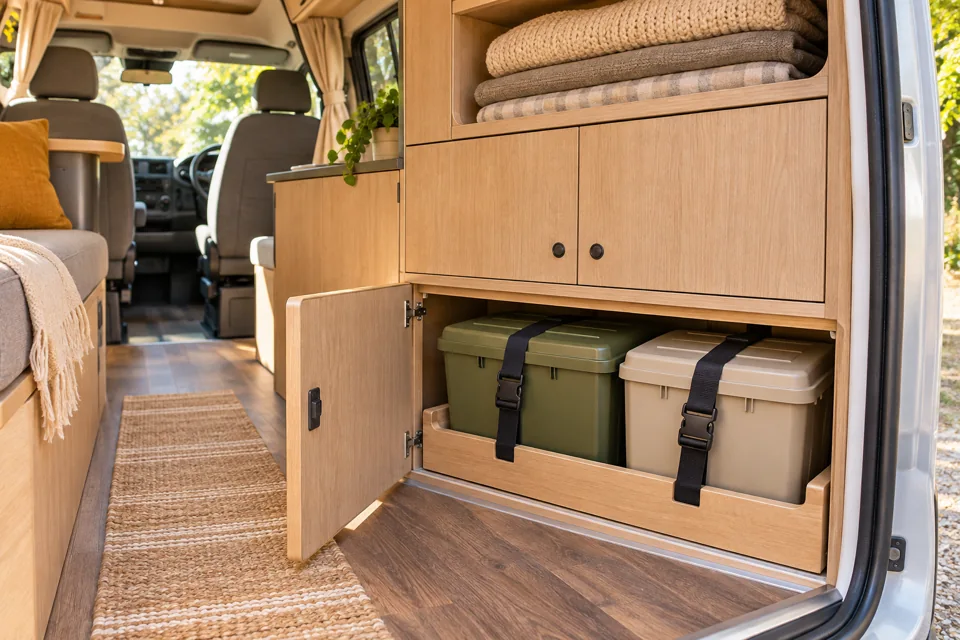
Place heavier items low in suitable secured locations, respecting the complete loading and axle plan. Close and latch drawers, cupboard doors and lids. Restrain the contents, table, cushions and removable equipment appropriately; a closed door alone may not be the complete restraint arrangement.
Keep required ventilation, battery or fuel-system spaces, isolation points and service access clear. Secure items in the cab too. The cup and decorative objects in a photograph of a parked van need a different home before driving.
Walk around outside. Check that rooflights, windows, doors, steps, awnings and external lockers are in their required travel positions. Disconnect and stow external supplies using their approved procedures. Know any appliance restrictions for travel or refuelling rather than assuming every system can be left running.
7. Start with a short, ordinary practice stay
Choose a nearby permitted place, ideally with straightforward access and facilities that suit your needs. Confirm the booking or permission, arrival arrangements and relevant site rules. A campsite trial need not prove your maximum off-grid endurance.
Try the small routines: make a drink, prepare food using an already checked cooking arrangement, wash up, use the toilet facilities, change the bed and put things away. Notice how much water, charging and storage the routine actually needs.
Keep a short snagging list with three columns: issue, action and who will handle it. Separate faults that prevent safe use from comfort improvements. Stop using a suspect system and get it checked; do not turn a practice trip into an improvised repair session.
A calm first night close to home can reveal the practical changes worth making. It cannot validate hidden structural connections or replace the required system checks.
A short departure checklist
- Essential vehicle and conversion checks are complete; unresolved faults prevent departure.
- Applicable weight, axle, tyre and licence requirements are understood and met.
- Passengers use appropriate travel seats and restraints.
- Doors, drawers, lids and loose contents are secured.
- Windows, rooflights, steps, awnings and external lockers are in travel position.
- External supplies are disconnected and stowed correctly.
- Appliances are in the required travel mode or shut down according to their instructions.
- Alarms, emergency arrangements and exit access have been checked.
- The route suits the finished vehicle dimensions.
- Keys, instructions, contact details and first-night arrangements are accessible.
After the practice trip
Inspect accessible fixings, catches and service areas for movement, leaks, rubbing or dampness. Report changes to the appropriate installer and resolve the cause before using affected equipment again.
Clean and store the water and sanitation systems using their instructions and approved disposal arrangements. If frost or storage is relevant, follow the exact appliance and water-system procedures. Remove wet materials and leave the van clean and dry.
Update the packing list and actual budget. Improve the few things that made the biggest difference before adding more equipment. Keep the inspection and maintenance routine with your build records so the conversion remains usable beyond its first weekend.
Official guidance and equipment instructions
Original CamperSteps writing and illustrations. This is a practical planning checklist, not a roadworthiness, installation or legal approval.
- GOV.UK: vehicle weights explained and finding a weighbridge.
- The Highway Code: vehicle maintenance, safety and security.
- GOV.UK: driving a motorhome and passenger seating guidance.
- Northamptonshire Fire and Rescue: caravans and camping, and GOV.UK: fire safety outdoors.
References checked 2 November 2026. Requirements vary with the vehicle and use; confirm the relevant current guidance and the exact installed-equipment instructions. This guide does not change a saved plan or equipment prices.